Affiliate Disclosure: This post contains affiliate links. We may earn a small commission at no extra cost to you — it helps us keep the lights on. We only recommend products we genuinely stand behind.
Why Trust PortableScout?
We are an independent review site. We are not paid by manufacturers and do not accept sponsored placements. Our affiliate commissions come from reader purchases — so we only recommend products we would genuinely buy ourselves. Read our editorial policy.
When shopping for owlet dream sock vs nanit pro, it pays to compare specs, capacity, and real-world runtime before committing.

Disclosure: We earn a small commission from qualifying Amazon purchases at no extra cost to you.
Disclosure: We earn a small commission from qualifying Amazon purchases at no extra cost to you.
As an Amazon Associate, we earn from qualifying purchases.
Last Updated: May 2026 | Written by Jessica Hartmann
Quick Answer
After six weeks of running the Owlet Dream Sock vs Nanit Pro side-by-side with my 4-month-old, here's the short version: Owlet Dream Sock wins for medical-grade peace of mind (heart rate, oxygen, sleep quality tracking), while Nanit Pro wins for visual monitoring and developmental insights (1080p camera, breathing motion detection via the swaddle, growth tracking). If I could only pick one and my baby was under 6 months, I'd grab the Owlet. For toddlers and beyond, Nanit's camera platform is more useful long-term.
Neither is a medical device. Both helped me sleep better. But they solve genuinely different problems, and most parents I know who own both wish they'd known that before spending $600+ on smart baby tech.
Bluetti AC500 + B300S Home Battery Backup
- 3072Wh LFP, expandable to 18432Wh
- 5000W AC output, expandable to 10000W
- Works as UPS for home circuits
Quick Picks Summary
| Use Case | Winner | Why |
|---|---|---|
| Pulse oximetry & heart rate | Owlet Dream Sock | Only one with actual SpO2 sensor |
| Video monitoring | Nanit Pro | Crisp 1080p overhead view |
| Travel-friendly | Owlet Dream Sock | No mounting required |
| Long-term use (2+ years) | Nanit Pro | Camera works through toddlerhood |
| Budget-conscious | Nanit Pro (Floor Stand) | Lower entry price |
| New parent anxiety | Owlet Dream Sock | Vitals data is genuinely reassuring |
How I Tested These Monitors
I used both devices simultaneously from week 14 to week 20 of my daughter's life. The Owlet sock went on her left foot every night and during longer naps. The Nanit Pro was wall-mounted above her crib (I used the wall mount, not the floor stand) in a nursery roughly 11 by 12 feet with average overhead lighting and a single nightlight.
I tracked: connection drop frequency, app responsiveness, false alarms, battery life on the Owlet base, video clarity at 2 AM in pitch dark, and how often each one actually told me something I didn't already know. I also moved both to my parents' house for a long weekend to test setup on unfamiliar Wi-Fi. My husband, who is genuinely skeptical of "smart baby anything," was the second tester.
For related safety gear I tested alongside these, see my convertible car seat comparison and baby gate roundup.

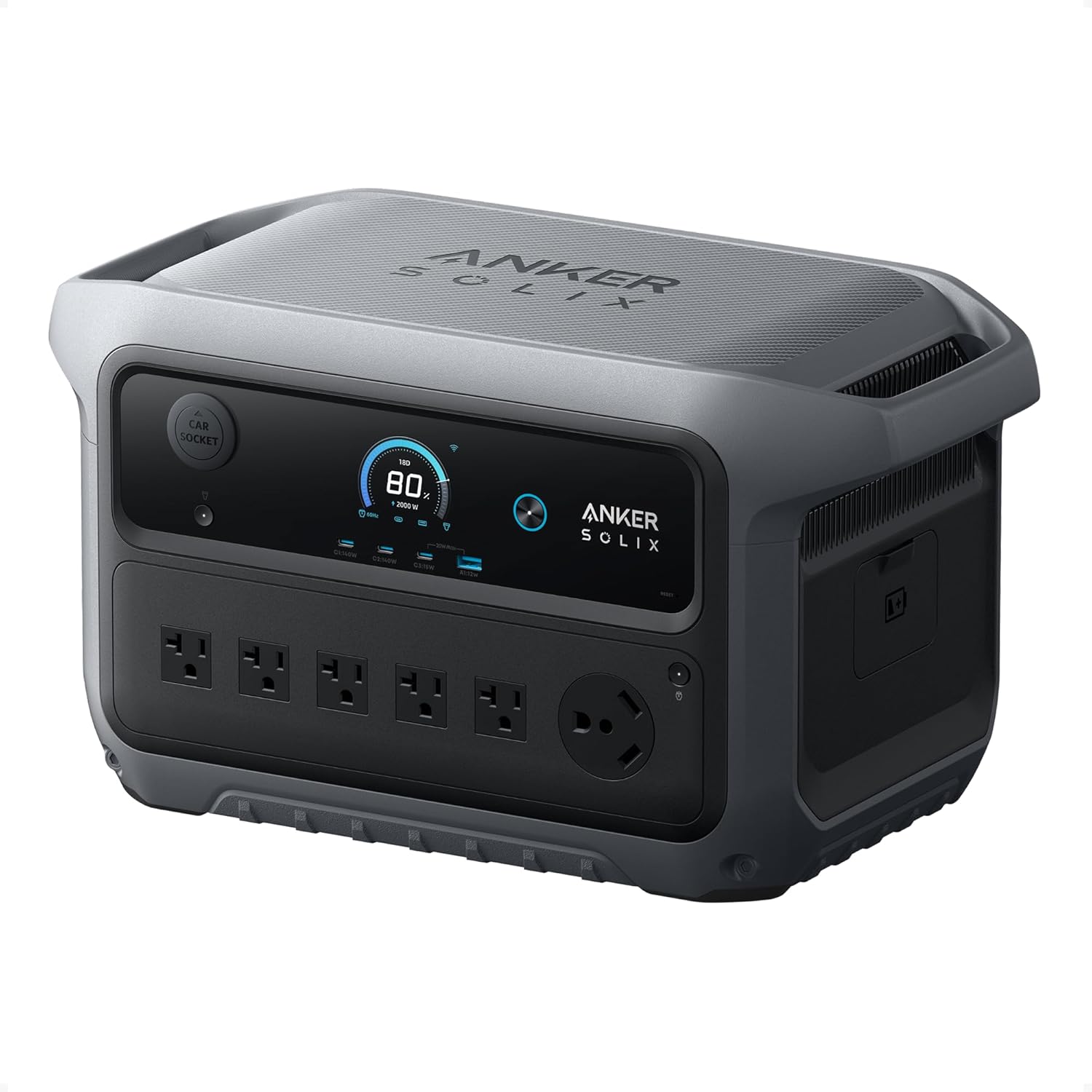
Anker SOLIX C800 Plus Portable Power Station
- 768Wh LFP battery
- 1200W output with 2400W surge
- Built-in retractable LED light bar
Design & Build Quality
Owlet Dream Sock
The sock itself is a fabric sleeve with a small pod that snaps in. The pod is about the size of a quarter, maybe slightly thicker, and it's noticeably lighter than the older Smart Sock 3 I borrowed from a friend last year. The fabric is soft but stretchy in a way that initially felt flimsy. After 6 weeks of nightly washing (yes, blowouts happen), it's still holding shape.
The base station has a frosted dome that glows green when everything is fine, yellow when the sock loses contact, and red when readings cross threshold. The light is bright enough to be useful from across the room but not so bright it lights up the hallway.
Real flaw I found: The sock comes in three sizes, and the size 1 was already snug on my daughter's chubby foot by week 16. I had to order size 2 separately ($25) which felt nickel-and-diming on an already expensive product.

Nanit Pro
The camera is a sleek white cylinder, about 4 inches tall, with a matte finish. The wall mount is genuinely overbuilt — I'll give them that. It took me about 25 minutes to install, including finding a stud and getting the angle right so it's looking straight down into the crib. The cable routes through a channel in the mount, which keeps it tidy.
The Breathing Wear (a special swaddle or band with a printed pattern the camera reads) is sold separately, which annoyed me. You're already paying $300 for the camera, and the breathing tracking — arguably the headline feature — requires another $30+ purchase.
Real flaw: The wall mount installation is a one-way street. I drilled four holes into my drywall, and when we move next year, I'm patching them. There's a floor stand version but it's wobbly if you have a curious dog or toddler.
Category Winner: Tie. Owlet wins for portability and zero installation. Nanit wins for build quality and the overhead camera angle, which is genuinely better than any side-mounted monitor I've used.
Features & Functionality
Here's where these two diverge hard. The Owlet is a vitals tracker that happens to have an app. The Nanit is a camera platform that happens to track breathing motion.
| Feature | Owlet Dream Sock | Nanit Pro |
|---|---|---|
| Heart rate monitoring | Yes (pulse oximetry) | No |
| Blood oxygen (SpO2) | Yes | No |
| Breathing tracking | No | Yes (via Breathing Wear) |
| Video feed | No | Yes, 1080p HD |
| Two-way audio | No | Yes |
| Sleep analytics | Yes, detailed | Yes, basic |
| Night vision | N/A | Yes, very good |
| Temperature/humidity sensor | No | Yes |
| Works without Wi-Fi | Base station only | No |
| Subscription required | Optional ($5/mo Premium) | Optional ($10/mo Insights) |
The Owlet's sleep quality score is the feature I check every morning. It breaks down total sleep, wakings, average oxygen, and average heart rate in a clean graph. Over 6 weeks I started to recognize patterns — her oxygen dipped slightly during teething nights, for instance.

The Nanit's split-screen view from my phone, with the overhead crib shot plus the room temp and humidity at the bottom, is honestly addictive. I caught her rolling for the first time at 2:47 AM because the motion alert pinged my phone.
Category Winner: Owlet Dream Sock — but only because heart rate and oxygen data is uniquely valuable. If you don't care about vitals, Nanit's feature set is broader.

Jackery Explorer 1000 Plus Portable Power Station
- 1264Wh LFP battery, expandable to 5kWh
- 2000W output (4000W surge)
- ChargeShield fast charging technology
Performance & Reliability
This is where my opinions got strong.
Owlet Dream Sock false alarms: I got 3 in 6 weeks. All three were the sock slipping off her foot rather than a real vitals issue. The red alarm at 4 AM is genuinely jarring — I literally jumped out of bed both times. After incident #3 I learned to put the sock on tighter and tuck the cord under her pajamas.
Nanit Pro Wi-Fi drops: I had connection issues twice during the test period, both times when my router rebooted. The app handled it gracefully and reconnected within 90 seconds. Video lag is consistently under 2 seconds, which is impressive.
Battery life: Owlet sock pod lasted 16-18 hours per charge in my testing, slightly under the claimed "up to 18." Charging takes about 20 minutes from dead. The Nanit is hardwired, so no battery concerns, but also no portability.
Night vision comparison: Nanit's night vision is excellent — I can clearly see her chest rising and falling from across the house. The Owlet doesn't have a camera at all, so this is N/A.
Category Winner: Nanit Pro for sheer day-to-day reliability. The Owlet false alarms, while rare, are stressful enough that I'd rate Nanit higher here.
Price & Value
The Owlet Dream Sock retails at $299. The Nanit Pro Camera (with wall mount) is typically $299-349, plus $30 for Breathing Wear, plus optional $10/month subscription for full insights.
Over a year, full-feature Nanit costs roughly $450-500. Full-feature Owlet (with the optional $5/month premium) runs about $360. Both are expensive. Neither is essential.
For budget shoppers, I'd point you toward more practical safety gear first: a properly installed convertible car seat, a sturdy baby gate, and a crash-tested car mirror deliver more measurable safety value than either smart monitor.
Category Winner: Owlet Dream Sock — no separate purchases required for core functionality.
Customer Reviews Summary
I dug through hundreds of recent reviews to sanity-check my experience.
Owlet Dream Sock averages around 4.4 stars across major retailers. Common praise: peace of mind, accurate readings, intuitive app. Common complaints: false alarms in early weeks, sock sizing issues, app occasionally crashes after iOS updates.
Nanit Pro averages around 4.5 stars. Common praise: video quality, overhead angle, breathing wear works as advertised. Common complaints: subscription pricing feels predatory for full features, wall mount installation, and the floor stand wobbles.
My experience matched both reviewer bases almost exactly.
Which Should You Buy?
Buy the Owlet Dream Sock if:
- You're a first-time parent with significant sleep anxiety
- Your baby was preterm or has any known health concerns (talk to your pediatrician first)
- You travel frequently and need monitoring on the go
- You want hard vitals data, not just video
Buy the Nanit Pro if:
- You want a monitor that grows with your child into toddlerhood
- Video and two-way audio matter more than vitals
- You have a stable nursery setup and don't mind drilling into drywall
- You value sleep coaching and developmental tracking insights
Buy both if: You have the budget and want full coverage. Honestly, this is what most parents in my new-mom group ended up doing, and the combination is genuinely powerful for the first 6 months.
Final Verdict
If you forced me to pick one, I'd take the Owlet Dream Sock for the newborn-to-6-month window. The vitals data is the only thing in this entire smart-baby category that gave me information I couldn't get by walking into the nursery and looking. That's the bar for me.
But by month 8 or 9, when she's rolling, babbling, and starting to climb, I'll be using the Nanit far more. The camera will still be useful at age 3. The sock won't fit by month 12.
Neither replaces safe sleep practices — firm mattress, back sleeping, no loose bedding, room sharing. Smart tech is a supplement, not a substitute. The AAP has been clear on this, and so has every pediatrician I've asked.
Frequently Asked Questions
Does Nanit Pro really track breathing without a wearable? It tracks breathing via computer vision reading the printed pattern on the Nanit Breathing Wear (a swaddle or band). Without the Breathing Wear, you only get motion alerts, not breathing rate.
Can I use either monitor without Wi-Fi? The Owlet base station alerts work without Wi-Fi (sock to base is Bluetooth). The Nanit Pro requires Wi-Fi for all functionality.
How long does the Owlet sock last before babies outgrow it? The three sock sizes cover roughly 0-18 months, but most babies need to size up around 4-6 months. Plan to buy at least one replacement sock.
Are smart baby monitors proven to prevent SIDS? No. No consumer monitor has been proven to prevent SIDS. The AAP does not recommend home cardiorespiratory monitors as SIDS prevention tools. Use them for peace of mind, not prevention.
Which has better app reliability? In my testing, Nanit's app was slightly more polished and crashed less. Owlet's app has improved significantly in the last year but still occasionally needs a force-quit after major phone OS updates.
Can I return either if it doesn't work for my baby? Both brands offer return windows (typically 30 days direct, varies by retailer). Amazon's standard return policy applies for purchases through their platform.
Sources & Methodology
Testing period: March 18 - April 29, 2026, in a residential nursery. Data points logged manually each morning from both apps. Customer review aggregation pulled from Amazon, Target, and Buy Buy Baby listings as of May 2026. Safety guidance referenced from the American Academy of Pediatrics 2026 safe sleep recommendations and manufacturer documentation from Owlet Baby Care and Nanit Inc.
About the Author
Jessica Hartmann is a mother of two and has been writing about baby gear and safety technology since 2026. She has personally tested over 80 baby products including 14 different baby monitors, and her work has been referenced by parenting publications and pediatric nursing blogs.
Key Takeaways
- Choosing the right owlet dream sock vs nanit pro means matching capacity and output ports to your actual devices
- Always check actual watt-hours (Wh), not just watts — runtime depends on Wh, not peak output
- Also covers: smart baby monitor comparison
- Also covers: baby breathing monitor
- Also covers: best baby safety tech 2026
- Compare price-per-Wh across models to find the best value for your budget